
Localization Is Hot: Brands Are Moving Beyond Translation to True Cultural Adaptation in Marketing
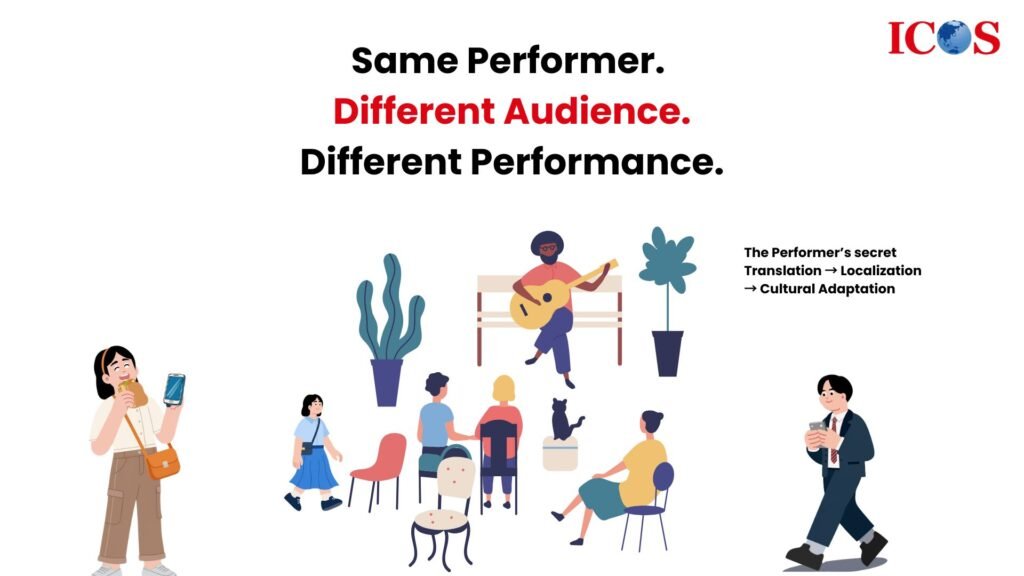
A street performer in Marrakesh has only thirty seconds to stop a crowd in its tracks.
He doesn’t speak. He doesn’t need to. He reads the energy of the square, the pace of the footsteps, the mood of the people walking by, and within seconds, he shifts his entire act to match it.
He spots a group of tourists passing by, cameras at the ready, their eyes searching for an “authentic” moment to record.
He decelerates his pace, slows his tempo, adds a touch of drama, and poses in the country’s tradition for the camera.
Minutes later, a group of local teenagers strolls by. They are half-distracted, scrolling their phones.
He switches instantly- faster movements, sharper humor, references that land only with people who grew up there.
Same performer. Same skills. Same square. But two completely different performances, because two completely different audiences were standing in front of him.
Now imagine he didn’t do that. Imagine he ran the exact same act, word for word, gesture for gesture, no matter who walked by.
The tourists might have still clapped politely, but for sure, the teenagers would walk straight past him without breaking stride.
He’d still be “performing.” Technically, nothing would be wrong. But he’d be invisible to half the people in that square, and he’d never even realize it.
This is, almost exactly, what’s happening to brands that think translation is enough when they enter new markets. They keep the same act, just dubbed into a different language, and then wonder why half the audience walks straight past.
Here’s the thing about that street performer, though. He didn’t get good at reading a crowd overnight. It took years of standing in that square, watching reactions, adjusting, failing, adjusting again, until reading the room became his ‘instinct’.
Brands don’t have that kind of time anymore. Markets move too fast, audiences are too sharp, and the cost of “performing for the wrong crowd” shows up immediately, in bounce rates, in abandoned carts, in campaigns that quietly underperform with no obvious explanation.
So in 2026, the brands pulling ahead aren’t the ones translating faster. They’re the ones learning to read the crowd, every crowd, in every market, and shifting the entire performance to match.
They are the ones for whom cultural adaptation in Marketing has become a priority.
Let’s break down what that actually looks like.
Localization vs Translation: Why the Old Model Is Breaking
For the longest time, “going global” meant one thing:
- Translate your content
- Swap the language and
- Ship it out.
Job done.
But translation only deals with words. It doesn’t touch the things that actually shape how people feel about a brand: humor, color associations, payment habits, visual hierarchy, even the rhythm of how a sentence is supposed to sound.
Think about it this way.
- A bright red call-to-action button might scream “urgency” in one market and “danger” or “mourning” in another.
- A checkout page that assumes everyone pays by credit card is going to confuse a customer in a market where digital wallets dominate.
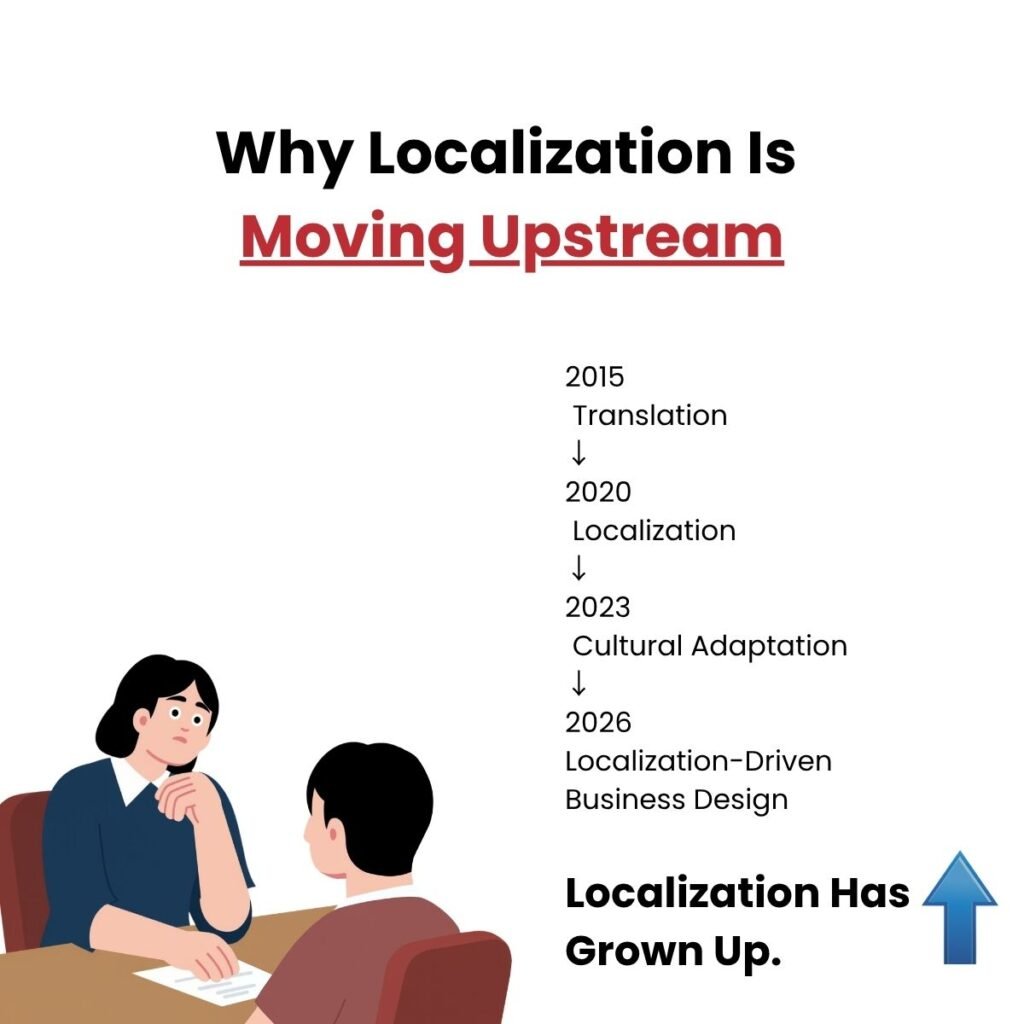
This is the gap between localization vs translation that brands are finally waking up to. Translation changes the language. Localization changes the experience.
And in 2026, with AI handling the bulk of routine translation work at near-perfect accuracy, the real differentiator isn’t the words anymore. It’s everything around the words.
Brands like Netflix, Airbnb, and Coca-Cola didn’t just translate their interfaces and campaigns for new markets. They rebuilt the experience: adjusted UX flows, swapped visuals, rethought color codes, and changed how their products are presented so they feel native rather than imported.
That’s the bar now. And it’s only getting higher.
Why Brands Are Prioritizing Cultural Adaptation in 2026
So why now? Why has this shift suddenly become the headline conversation in marketing circles?
Here are the reasons:
- While AI has mastered the art of high-speed translation, it has also turned a spotlight on the brands that still feel “foreign,” exposing those that swap words but fail to bridge the deeper cultural divide.
- As markets around the world assert their unique identities, global fragmentation is on the rise, transforming local relevance from a nice-to-have finishing touch into a mandatory strategic requirement.
- Today’s audiences are sharp enough to spot the difference between a brand that genuinely gets them and a translated global playbook, and any visible gap between the two quickly chips away at consumer trust.
A CSA Research study across 29 countries found that 65% of consumers prefer content in their own language, and 40% won’t buy at all if it isn’t available in their language.
This is why cultural adaptation in marketing has moved from “something the localization team handles” to a conversation happening in boardrooms. It’s no longer a finishing touch. It’s a strategic decision that affects how a brand designs, builds, and presents itself in every market it enters.
What is Transcreation in Marketing : The Human Layer AI Can't Replace
If AI can translate almost anything almost instantly, what’s actually left for humans to do?
This is where transcreation comes in. Transcreation isn’t translation with extra polish. It’s recreating a message so that it produces the same feeling, the same reaction, the same emotional pull, in a completely different cultural context, even if that means changing the words entirely.
A tagline built around a pun in English might need to become a completely different sentence in Portuguese, one that has nothing literally in common with the original, but that captures the exact same spirit.
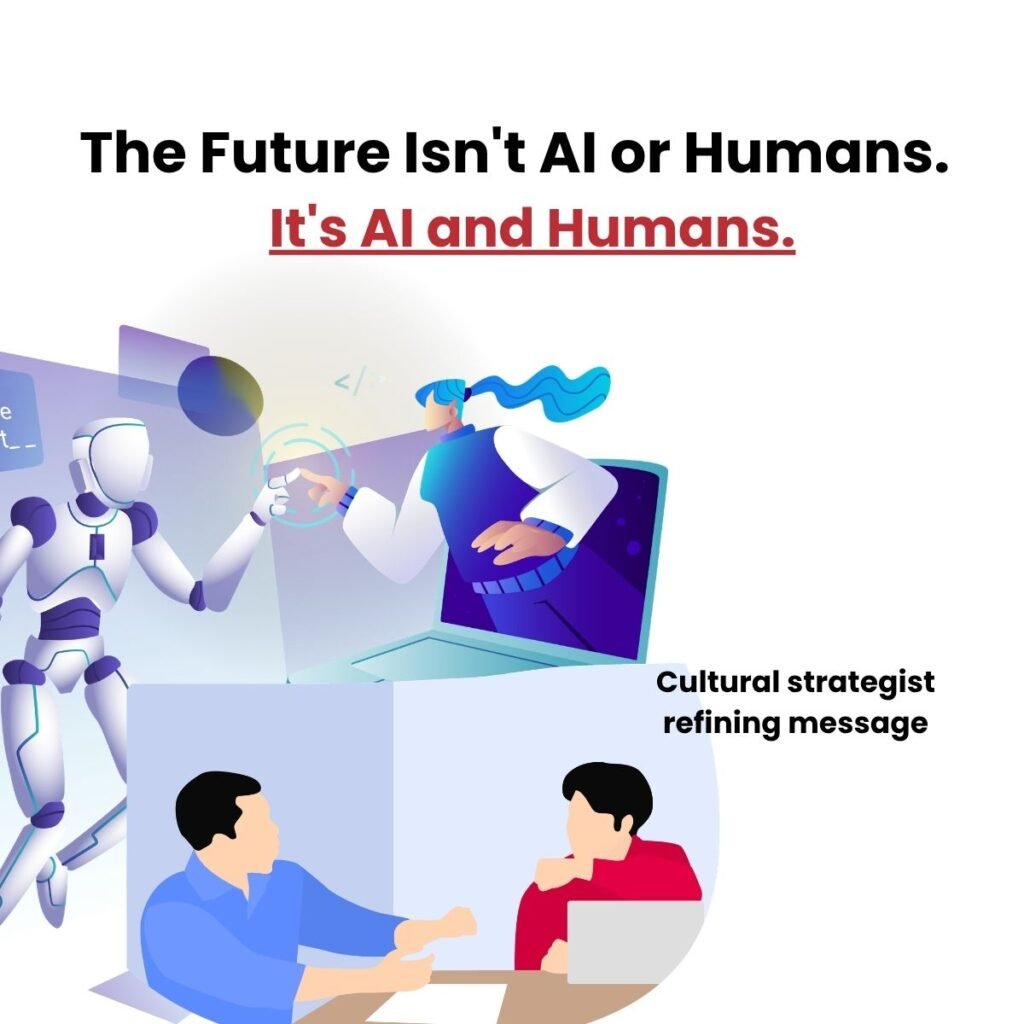
The winning approach in 2026 is a hybrid one. AI takes care of the bulk of the work, the product descriptions, the routine updates, the high-volume content that needs to move fast. That’s the 80 to 90 percent. But the remaining slice, the brand taglines, the emotionally charged campaigns, the moments where a single wrong word could backfire, that’s where skilled linguists and cultural specialists step in.
Think of AI as the engine and transcreation as the steering wheel. One gives you speed. The other makes sure you’re heading in the right direction, for the right audience, in the right tone.
Brands that get this balance right are the ones building campaigns that don’t just get understood. They get felt.
Global Brand Localization 2026: What's Changing Behind the Scenes
Here’s the part most people don’t see. The shift toward cultural adaptation isn’t just happening in marketing departments. It’s reshaping how entire companies operate.
Global brand localization 2026 looks less like a marketing checklist and more like an enterprise-wide rewiring. Localization is getting embedded into product design, supply chains, data infrastructure, and even how teams are structured.
Take Unilever’s approach in Australia and New Zealand.
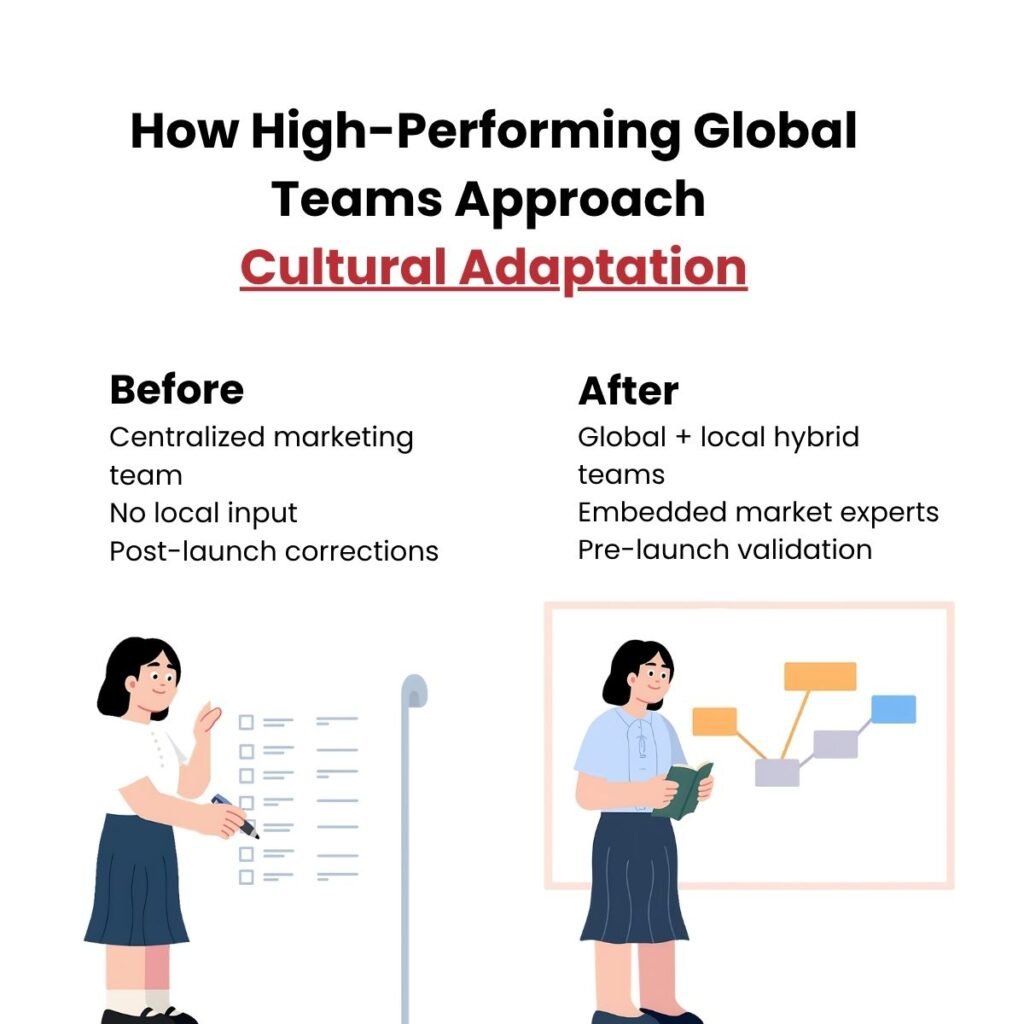
Instead of running campaigns designed centrally and rolled out everywhere, the company restructured its marketing around a social-first, local-market model, putting a significant chunk of its media budget into local social and influencer presence.
The decision wasn’t made in a vacuum. It was made because local teams understand local culture in ways a centralized team simply can’t.
Or consider how some consumer goods brands have redesigned products entirely for specific regional conditions, like detergents engineered differently for water-scarce areas. That’s not a marketing tweak. That’s localization shaping the actual product.
Brands are realizing that if cultural adaptation only lives in the marketing team, it’s always going to be a patch job, a translated ad layered on top of a product and experience that was never designed with that audience in mind.
The brands pulling ahead in 2026 are the ones treating local relevance as something that needs to be built in from the start, not bolted on at the end.
How to Build Cultural Intelligence in Marketing Teams
So how does a brand actually get there? How do you build a team that thinks this way as a default, not as an afterthought?
- It starts with people. Specifically, bringing in voices who understand the nuance of a market from the inside, not just the data points about it. Their job is to look at high-stakes content, the taglines, the hero campaigns, the legally sensitive material, and the like.
- Next comes feedback loops. Real ones. Not a survey sent out after a campaign has already gone live, but ongoing conversations with people in the target market, before content goes out the door.
- Then there’s the audit. Brands are increasingly going back through their existing content, the websites, the ad libraries, the email templates, and checking it against a simple filter: was this built for this market, or just translated for it?
- And finally, there’s the data question. As more AI tools get involved in localization, brands are paying closer attention to what those tools were trained on. A model trained mostly on content from one part of the world is going to carry that bias into everything it produces. Brands that care about getting cultural adaptation right, are starting to ask their AI partners hard questions about the diversity of their training data.
None of this happens overnight. But it’s the difference between a brand that occasionally gets localization right by accident, and one that gets it right by design, every time.
Localized Customer Experience: Beyond Language
Let’s go back to that square in Marrakesh for a second. Imagine the performer nailed the act, the tone, the humor, everything about the “show” itself. But the moment someone wanted to tip him, the payment app he used wasn’t one anyone in the crowd recognized. Or imagine his props were arranged in a way that, in this particular culture, felt disrespectful rather than playful. Suddenly, all that careful reading of the crowd gets undone by something happening just outside the performance itself.
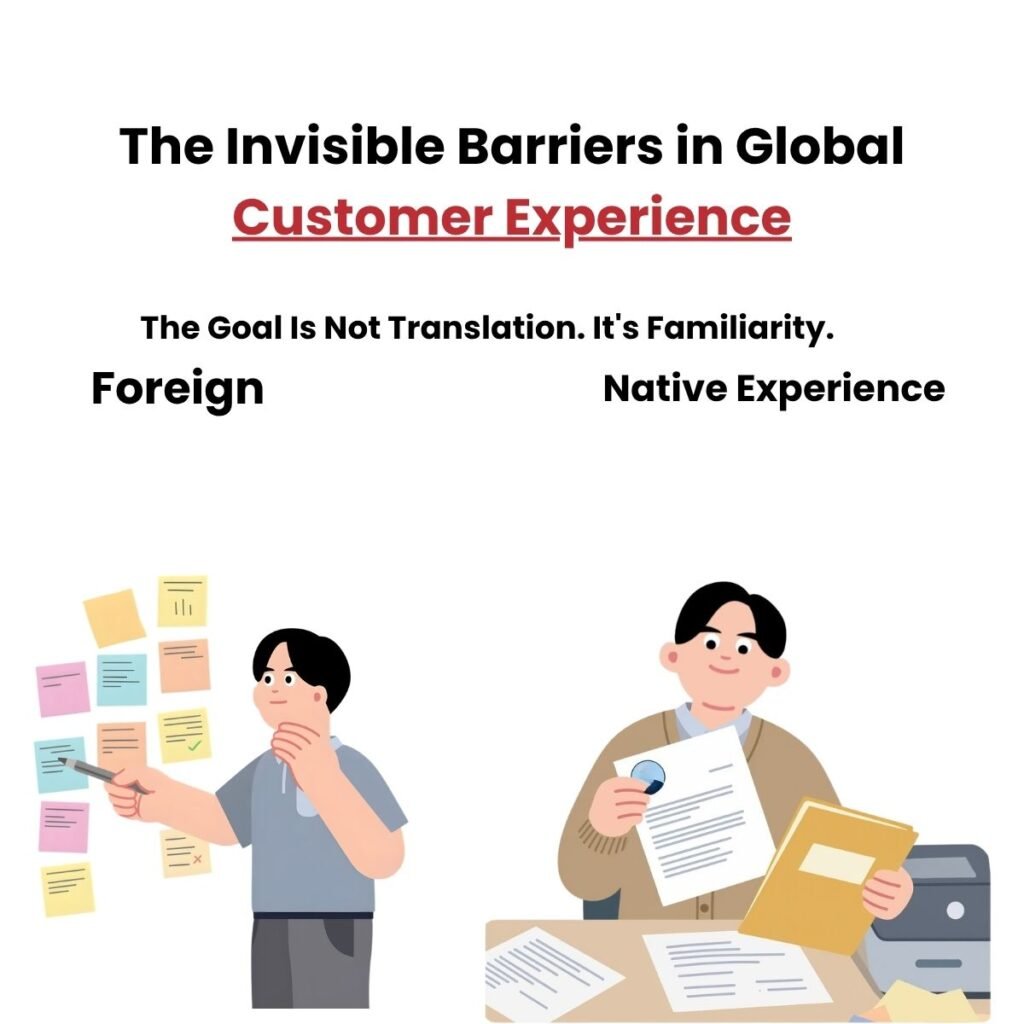
That’s what a localized customer experience actually means, and it’s the part of cultural adaptation that’s easiest to overlook because so much of it happens in the background.
Transaction habits are a make-or-break detail;
- A checkout experience anchored in credit cards creates immediate friction in regions where digital wallets or local mobile apps are the standard, leaving brands with high abandonment rates even when the messaging is flawless.
- Visual palettes carry heavy weight too, as color symbolism shifts dramatically across borders; neglecting this nuance can inadvertently broadcast negative signals that alienate the very people you want to reach.
- Ultimately, the rhythmic flow of an interface- from white space to navigation- needs to mirror local UX expectations so that every visitor feels like a native user rather than an uninvited guest.
The brands leading on cultural adaptation in marketing right now understand that the experience is the message. Every touchpoint, from the first ad someone sees to the final click on a payment button, either reinforces “this brand gets me” or quietly chips away at it.
FAQ
What is the difference between localization and cultural adaptation?
Localization adapts content basics like language, formatting, and currency. Cultural adaptation goes deeper, shaping the experience around how people think, feel, and expect brands to communicate.
Why is cultural adaptation important for global brands?
Audiences can tell when a brand truly gets them versus when it’s just running a translated version of a global campaign. Cultural adaptation builds trust faster and helps brands feel native, not imported.
How do brands implement cultural adaptation strategies?
It starts with local research, then extends to adapting visuals, tone, UX, and even product design. Many brands bring in local experts to review high-stakes content before launch.
What industries need cultural adaptation the most?
Consumer-facing sectors like retail, e-commerce, food, and entertainment feel it most. But it matters anywhere trust and tone shape the customer relationship, including healthcare and finance.
How does AI support cultural adaptation in localization?
AI handles routine translation and content at scale, freeing up human experts to focus on the emotionally critical pieces like taglines and hero campaigns.
Signing Off
So where does this leave brands heading into the rest of 2026?
The shift is clear. Translation is no longer the finish line, it’s the starting point. The brands that win are the ones treating every market as its own crowd, with its own rhythm, its own expectations, its own way of deciding who’s worth paying attention to.
It’s the difference between a performer who runs the same act for everyone, and one who reads the room and adjusts before the audience even realizes they’re being spoken to directly.
The good news? You don’t have to figure this out alone, and you don’t have to rebuild everything overnight. Start with an honest look at your current content. Ask which parts were genuinely built for your audience, and which parts were just translated for them. That one question tends to open up everything else.
Because in 2026, the brands that feel local everywhere are the ones that win everywhere.