Japanese Interpretation Service: Bridging Communication Between Japan and Global Businesses
Table of Contents
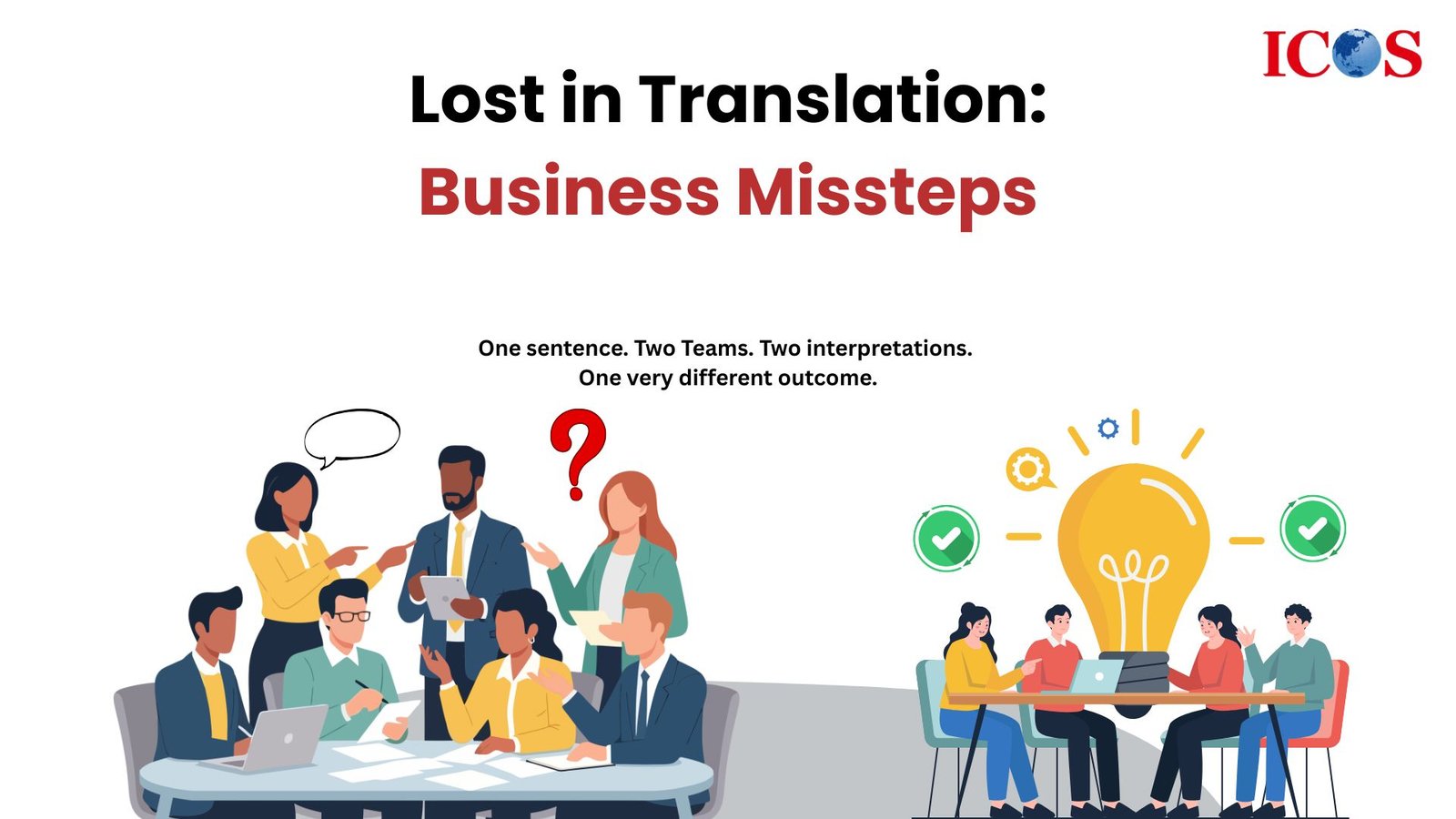
The room was quiet! So quiet that the humming of the air conditioner could be heard.
Across the table sat a Japanese delegation that was calm, composed, and unreadable. On the other side was the Indian team, waiting for the moment that would decide whether weeks of emails, presentations, and late-night preparations would pay off.
The lead indian representative leaned forward and spoke with a smile.
“We can definitely consider this proposal.”
The interpreter translated the sentence into Japanese. The words crossed the table smoothly. Heads nodded politely.
And meeting was over.
The Indian team stepped out feeling confident. The discussion had been respectful. The response sounded positive. Everyone assumed that the deal was closed successfully.
Except that, it wasn’t.
In English, “we’ll consider it” often signals openness, a soft yes, or at least a maybe.
In Japanese business culture, the translated version landed closer to a polite decline. A graceful way to end the discussion without creating discomfort.
One sentence. Two interpretations. One very different outcome.
Deals don’t collapse only because of bad strategy or pricing. Sometimes they collapse because meanings collapse between languages.
And Japanese communication is a delicate terrain. It is driven by context, hierarchy, and nuance. A slight shift in tone can quietly derail a negotiation within seconds.
That’s why businesses working with Japanese partners don’t rely on literal translation alone.
They rely on Japanese interpreter services: professionals who don’t just convert words, but carry intent, tone, and cultural signals across the table.
Because in international business, clarity is leverage
What Does a Japanese Interpreter Actually Do?
In real time, a Japanese interpreter “converts” spoken Japanese to another language.
The interpreter instantly conveys the meaning in one language while listening to another.
It’s a race of the mind. Words come in. Meaning is processed. The conversation never loses its pace since the message is conveyed precisely, quickly, and with clarity.
Key difference between Translation and Interpretation:
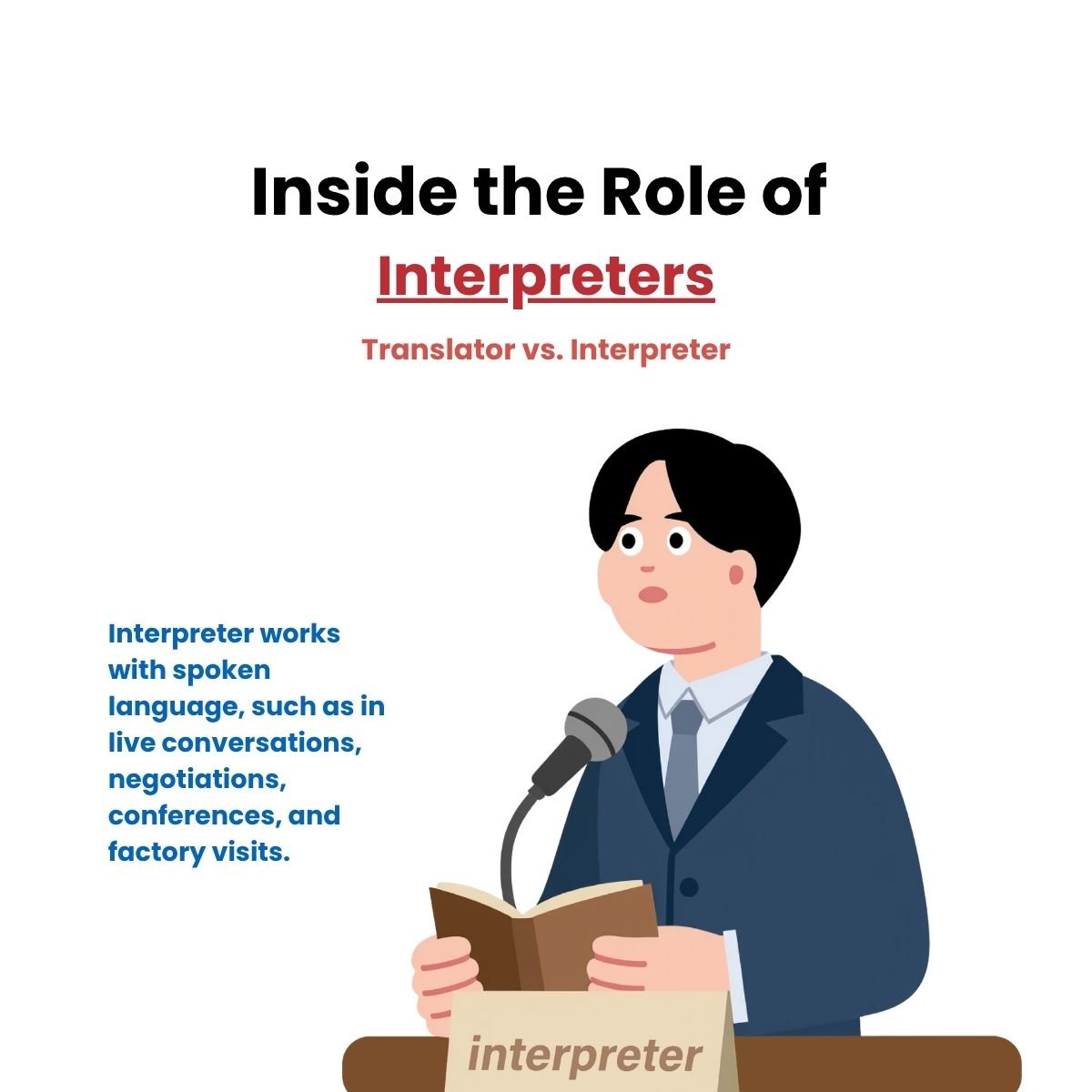
Although the terms “interpretation” and “translation” may sound similar, they are entirely different.
- Translation deals with written materials such as reports, manuals, and contracts.
- Interpretation works with spoken language, such as in live conversations, negotiations, conferences, and factory visits.
One works with paperwork. The other focuses on situations that cannot be replayed.
A trained interpreter monitors tone, hierarchy, politeness levels, and cultural nuances in real time. Because the manner in which something is expressed can be just as important as its content.
Types of Japanese Interpretation Service
- Simultaneous Interpretation – They are used in conferences and large events
- Consecutive Interpretation – Often used in business meetings
- Liaison Interpretation – Used for factory visits or negotiations
- Whisper Interpretation (Chuchotage) –Made for small group discussions
In every format, the goal remains the same and that is to keep the conversation flowing and the meaning intact.
Japanese Interpretation Services: What Do They Include?
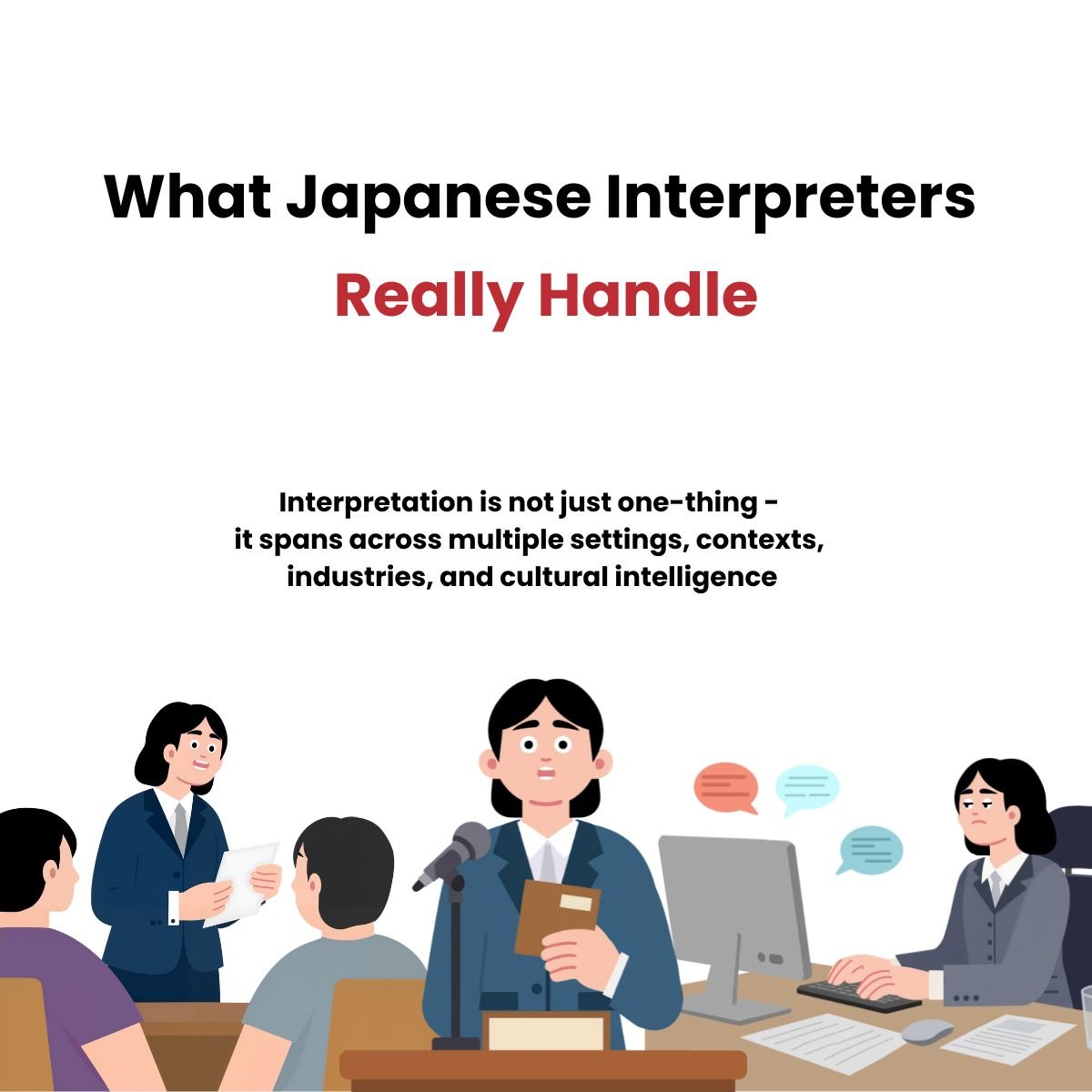
A lot of us think interpretation is just about language translation.
It’s not.
Because the moment two businesses sit across the table, the interpreter becomes the carrier of not just words. But also “Intent”.
And intent, once distorted, is very hard to fix.
A professional Japanese interpreter understands this weight. Hence they make sure what you mean is exactly what the other side understands.
And depending on where you are in the business journey, that role shows up differently.
Business Meeting Interpretation
This is where most relationships begin.
Negotiations. Investor conversations. Supplier discussions. Every sentence shapes perception.
A good interpreter ensures that your confidence doesn’t sound like arrogance. Your flexibility doesn’t sound like uncertainty and your proposal lands the way you intended it to.
Conference and Seminar Interpretation
The stakes high over here. One speaker. Hundreds of listeners. Zero room for delay.
The interpretation happens in real time. The speaker continues. The interpreter keeps up.It’s not just about speed. It’s about staying composed while delivering clarity to an entire room.
Because when the message reaches many, even a small error multiplies.
Factory Visit Interpretation
You’re walking the ground here. Japanese delegations visiting production facilities ask detailed questions about processes, machinery, quality standards, and safety procedures. These questions don’t come with rehearsed answers.
The interpreter moves with the conversation, translating the intent in motion. Because when you’re standing on a factory floor, confusion is visible more than theoretical.
Technical Interpretation
Every industry has its own language. Engineering. Pharma. IT. Manufacturing. They all have their precise systems of communication.
A general understanding won’t work here. The interpreter needs to think in that domain and interpret accordingly. One wrong term can shift understanding completely.
Legal and Medical Interpretation
This is where accuracy becomes non-negotiable, and situations demand absolute precision.
Legal discussions, compliance reviews, or medical consultations require interpreters who can handle complex terminology with clarity because the consequences can be lethal
A single misinterpretation can cost money, time, and sometimes even more.
Understanding the Role of Keigo in Japanese Communication
One of the most delicate aspects of Japanese interpretation is keigo, the system of honorific speech used to express respect and hierarchy.
Japanese professionals adjust their language depending on who they are speaking to. Senior executives, clients, and partners are addressed with carefully chosen expressions that signal politeness and professionalism.
An experienced interpreter recognizes these subtle cues and conveys them appropriately in the target language. Since in Japanese business culture respect is a mandate, it is embedded in the language itself.
And when communication flows with the right tone, it builds trust.
Why Businesses Need a Japanese Interpreter?
Many companies initially think that hiring a freelance interpreter is enough. Sometimes it works for smaller interactions. But when conversations involve high-value negotiations, technical discussions, or international delegations, businesses usually prefer working with a Japanese interpretation agency.
Here is why:
- Because precision matters- Not just words. The meaning behind them.
- Because experience shows- Interpreters who’ve been in the room before know how conversations really unfold.
- Because context changes everything- Technical industries need more than fluency. They need understanding.
- Because scale requires structure- Large meetings, multiple voices, long hours. It needs a system, not improvisation.
- Because preparation shapes outcomes- The best interpreters don’t arrive and react. They arrive ready.
- Because alignment builds trust- When both sides truly understand each other, decisions move faster.
- Because mistakes are expensive- One misinterpreted idea can cost more than the entire conversation.

How to Choose the Right Japanese Interpretation Agency (A complete Checklist)
Before you hire a Japanese interpretation agency, let’s look at a quick checklist that you can run through
- Native or near-native Japanese proficiency- Because meaning lives in nuance, not just vocabulary.
- Strong command over business communication- Because tone can change the outcome of a deal.
- Industry-specific experience- Because every domain has its own language.
- Proven experience in business interpretation- Because real conversations don’t follow scripts.
- Ability to handle simultaneous interpretation- Because some moments don’t wait.
- Experience with high-stakes meetings- Because pressure reveals capability.
- Familiarity with Japanese business culture- Because respect is often unspoken.
- Understanding of keigo (honorific language)- Because hierarchy must be communicated, not assumed.
- Ability to handle technical terminology- Because precision matters more in complex discussions.
- Availability for large events or delegations- Because scale requires structure.
- Consistency in interpreter quality- Because one weak link breaks the flow.
- Confidentiality and discretion- Because trust is part of the service.
- Flexibility for last-minute changes- Because business rarely goes exactly as planned.
- Good client reviews or track record- Because past performance leaves clues.
FAQ
What is the difference between Japanese interpretation and translation?
Interpretation happens in the moment. Conversations, meetings, live exchanges. Translation happens on paper. Documents, contracts, written communication.
How much does a Japanese interpreter cost in India?
Typically between ₹8,000 to ₹25,000 per day. The more specialized the setting, the higher the investment.
When should businesses hire a Japanese interpreter?
The moment clarity cannot be compromised. Especially during negotiations, meetings, factory visits, and presentations.
Can a Japanese interpreter help with factory visits or technical meetings?
Yes, if they understand the domain. Because technical conversations need more than language. They need context.
How far in advance should you book a Japanese interpreter?
At least 5–7 days. More time if the conversation is complex or high-stakes.
Signing Off:
Every international partnership looks strong on paper. Yet deals are rarely decided on paper.
They are decided in conversations. In the pauses between sentences. In how something is said, not just what is said.
That’s where most businesses underestimate the role of interpretation.
Japanese communication carries layers that don’t translate directly. Respect is structured. Agreement is often implied. Discomfort is rarely stated outright. If those signals are missed, the conversation may continue, but the alignment quietly breaks.
A skilled interpreter protects that alignment.
They ensure that when you speak, your intent arrives intact. When the other side responds, you understand what is actually being communicated, not just what is being said on the surface.
In a market where Japanese companies value long-term trust over short-term wins, clarity becomes a competitive edge.
Because when communication is handled right, business moves with confidence.