
9 Undeniable Benefits of Brand Localization
Table of Contents
In international travel, there’s one golden rule. No passport, no entry.
You can fly first class, carry a designer suitcase, even have an itinerary printed on gold paper. But when you land, none of it matters if you can’t get past immigration.
You’ll be stuck at the terminal, watching others step out into the city you came to explore.
In the world of business expansion, the same rule applies. No localization, no belonging.
You can have the best product, the most polished campaign, and the fattest marketing budget. But when your brand arrives in a new country and doesn’t speak its language– not the grammar but the emotion. Then your multi-million-dollar campaign becomes the guy at the counter arguing, “But I already have a ticket!”, but the entry is denied.
The world doesn’t care how global you are; it cares how local you sound. because the real paperwork isn’t your marketing plan. It’s your ability to understand the rhythm, the pride, and the pulse of the people you’re talking to.
Localization is your passport. It’s your authorization. It’s what stamps your brand as “trusted,”
So before you book your next global flight, pause and check your documents. Because without that passport, your brand might travel far, but it’ll never really arrive.
Before we get into the details, let’s be clear: localization isn’t about changing your logo, translating your tagline, or tweaking your color palette to look “culturally sensitive.” That’s cosmetics.
Real localization is a strategy.
From Content Localization, Sound Localization, App Localization, Website Localization to what your target audience thinks, lives, and breathes. It includes everything.
It’s when your brand doesn’t just show up in a new market: it fits in.
- It laughs where locals laugh.
- It respects what they revere.
- It speaks the unspoken truths that only insiders know.
And when you get that right, you become a local favorite with a global passport.
For detailed guide on Brand localization- Click here
Here are the 10 undeniable benefits of brand localization and why it’s the smartest move your brand will ever make.
1. You Stop Sounding Like an Outsider
There was a global pizza chain that launched in India and proudly promoted its pork toppings in a region where most people don’t eat pork. They didn’t offend anyone. They just revealed they hadn’t done their homework. Localization exists to prevent that kind of blind spot.
When your brand enters a new market, people don’t expect perfection. They expect awareness. Localization helps you show that you understand their habits, humor, and pace of life.
You don’t need to reinvent your brand. You just need to adapt your voice so people start hearing someone who “gets” them.

2. You Build Instant Trust
When Starbucks opened in China, they didn’t push American coffee culture. They introduced tea-based drinks and large shared tables because Chinese customers valued conversation more than caffeine. That one adjustment built instant credibility.
People trust brands that make an effort to understand them. They notice when you take the time to listen before speaking. Localization is all about respecting the person who’s listening.
When your audience feels that respect, trust follows naturally. They don’t see a global corporation. They see a brand that’s willing to meet them halfway.
3. You Don’t Just Translate, You Transcend
A translation error once made Pepsi’s slogan in China read as if the drink could raise the dead. It became a running joke, but it also showed how fragile meaning can be.
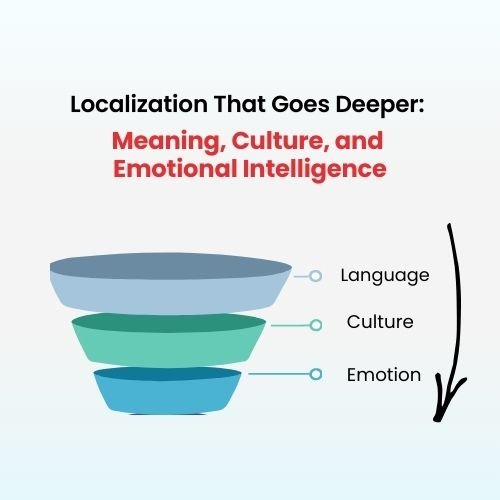
Localization protects your brand from that kind of cultural mismatch. It forces you to think beyond language: about emotion, intent, and perception. When Netflix redesigns show thumbnails for each country, it’s not just a creative choice. It’s an insight into what different audiences find interesting.
That’s the real goal of localization. It helps your message travel correctly, not just widely.

4. Your Marketing Becomes Emotionally Intelligent
Emotional intelligence in marketing starts with observation. It’s the reason a family-centered ad works in India while a minimal, individualistic message performs better in Sweden. The difference isn’t design. It’s cultural emotion.
When you localize, you start picking up those cues. You learn that silence can be respectful in one culture and distant in another. You understand that humor can build trust or break it. These are things analytics can’t measure, but people can feel.
Marketing becomes powerful when it feels human. Localization helps you reach that level of awareness.
5. You Reduce the Friction of Foreignness
Try using a foreign app that doesn’t accept your currency or recognize your address format. It works fine technically, but you feel excluded. That tiny disconnect is what stops people from completing a purchase or signing up.
Localization closes that gap. It adjusts design, payment options, customer support, and tone so that everything feels effortless. When people don’t have to “figure out” your brand, they start trusting it.
It’s not a luxury move; it’s a basic courtesy. And courtesy in business always pays off.
6. You Open Doors to New Revenue Streams
Localization doesn’t just help you enter new markets, it helps you see them clearly. Once you start adapting to local preferences, you notice patterns that big reports never reveal.
Take KFC in China. Instead of selling only fried chicken, they introduced rice bowls and congee because the breakfast culture there is different. That single adaptation turned them from a fast-food brand into an everyday meal choice.
When you localize, you start finding micro-markets inside the macro one. New products, new audiences, and new profit routes appear, simply because you listened.
7. You Build a Brand People Defend
A localized brand doesn’t just sell. It earns loyalty deep enough that customers defend it when things go wrong. You’ve probably seen this when global brands make small cultural missteps; the ones that did localize earlier usually get forgiven faster.
It’s because people see them as “one of us.” They’ve invested in the culture, supported local events, and spoken in local idioms. That builds emotional equity, the kind that PR budgets can’t buy.
When your brand becomes part of people’s identity, they don’t just buy from you, they protect you. That’s real brand strength.

8. You Future-Proof Your Brand
Markets change fast. What’s relevant this year might feel outdated next year. Localization helps your brand adapt without losing its soul. It keeps you close to the ground, listening to real behavior instead of relying on assumptions.
Look at how Netflix keeps tweaking its regional content. They don’t push global trends blindly. They create local stories that travel the world. That agility keeps them ahead while others play catch-up.
A localized brand doesn’t panic when the market shifts. It evolves naturally because it’s already tuned into people’s rhythm.
9. You Attract Better Talent and Partnerships
When your brand respects local culture, it attracts local talent who actually believe in what you’re building. People want to work for brands that fit in with their world.
Local marketers, creators, and agencies collaborate better with brands that understand context. The relationship feels like teamwork. That’s how creativity multiplies. when everyone speaks the same emotional language.
Localization makes your brand magnetic. It pulls in people who aren’t just skilled, but aligned. And that alignment shows in every campaign, product, and customer interaction.
FAQ’S
How to maintain Brand Voice in Localization
Keep your tone, values, and message consistent across languages while adapting expressions and cultural references to fit local emotions and context. Always translate meaning, not just words.
How to Choose a Localization Strategy for a Brand
Start by understanding your target market’s culture, language nuances, and preferences. Then, decide which elements—content, visuals, or tone—need full adaptation versus minor tweaks.
What are some Brand Localization Examples
Brands like Coca-Cola, Airbnb, and Netflix tailor their campaigns, taglines, and even visuals to reflect local traditions, humor, and languages for deeper audience connection.
How does Sound Localization work
Sound localization refers to how people perceive where a sound comes from. In branding, it helps create audio identities that feel natural and culturally familiar in each market.
What is Website Localization
Website localization adapts your site’s content, layout, visuals, and tone for a specific region or language, ensuring it feels locally made rather than globally imported.
Signing Off:
Your Brand’s Localization Is Your Passport to Belonging
Every market you enter is a new country, with its own rules, jokes, rhythms, and unspoken codes.
Hence, when a brand chooses to localize, it’s doing more than translating content or tweaking visuals. It’s choosing to participate in someone else’s world with humility.
It’s a way of saying, “We took the time to understand what matters to you, how you speak, and what makes you proud.” People notice that kind of effort consciously and emotionally.
Localization helps your brand blend into local humor, values, and even silences, the tiny unspoken things that make a culture feel alive. That’s why global brands that succeed across borders don’t feel foreign. They sound, look, and act like they’ve always belonged there.
Think of localization as your brand’s passport, stamped with real empathy and cultural intelligence. It’s the difference between visiting a country and being welcomed into it. Once your brand learns to belong, expansion stops being an ambition and becomes a natural invitation.