Digital Translation: How Indian Language Translation Is Powering India's Next Billion Internet Users
Table of Contents
A father in a village outside Patna gets his first smartphone at the age of 52.
His son set it up for him over a weekend visit. He installed the Apps, connected the Wi-Fi, and everything was ready to go.
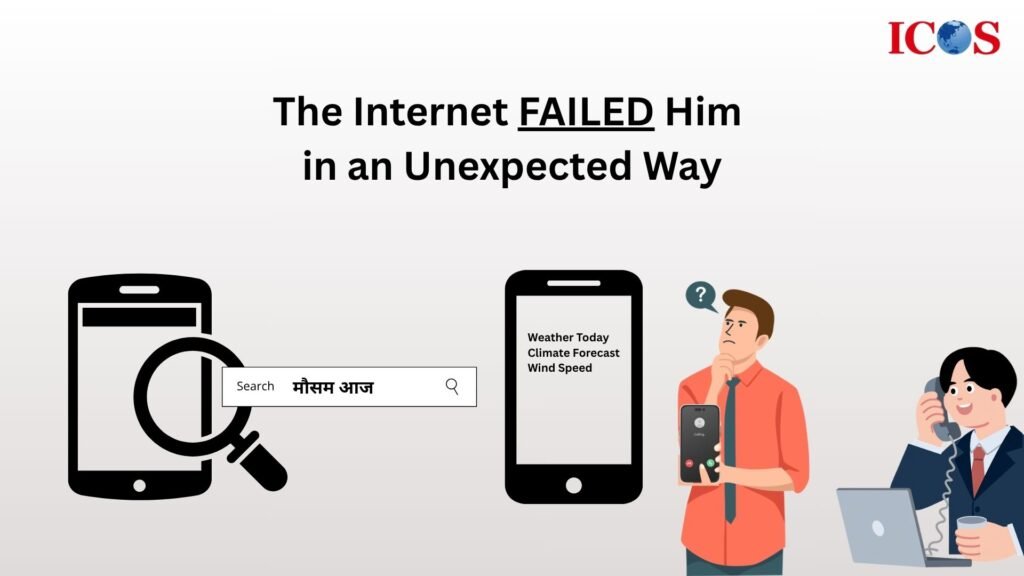
Before leaving, the son shows him the basics: How to open YouTube, How to make a video call, How to check the weather etc.
A week later, the son calls to check in. “Sab theek hai? Phone chal raha hai?” (Is everything ok? Is the phone working properly?)
“Haan beta, sab badhiya hai,” the father says. “Bas ek dikkat hai.” (Yes Son, everything is OK, but there is only one problem)
One problem. The son asks what it is.
“Jab bhi kuch khojta hoon, sab kuch English mein aata hai. Samajh nahi aata, kya likha hai.”(Whenever I search for something, everything comes back in English. I can’t understand what it says.)
The son is stunned for a second. He had set up the phone perfectly. The network was strong, the apps were all installed, the data plan was active. On paper, his father was “online.”
In reality, his father was standing in front of a locked door, holding a key that didn’t fit.
That one phone call captures something most digital growth conversations in India completely miss. Getting a billion people “online” was never the hard part. Getting the internet to actually speak to them, in a language they understand, that’s the part nobody finished.
And in 2026, that unfinished part is exactly where the next wave of growth is hiding.
Why Indian Languages Are Shaping Digital India
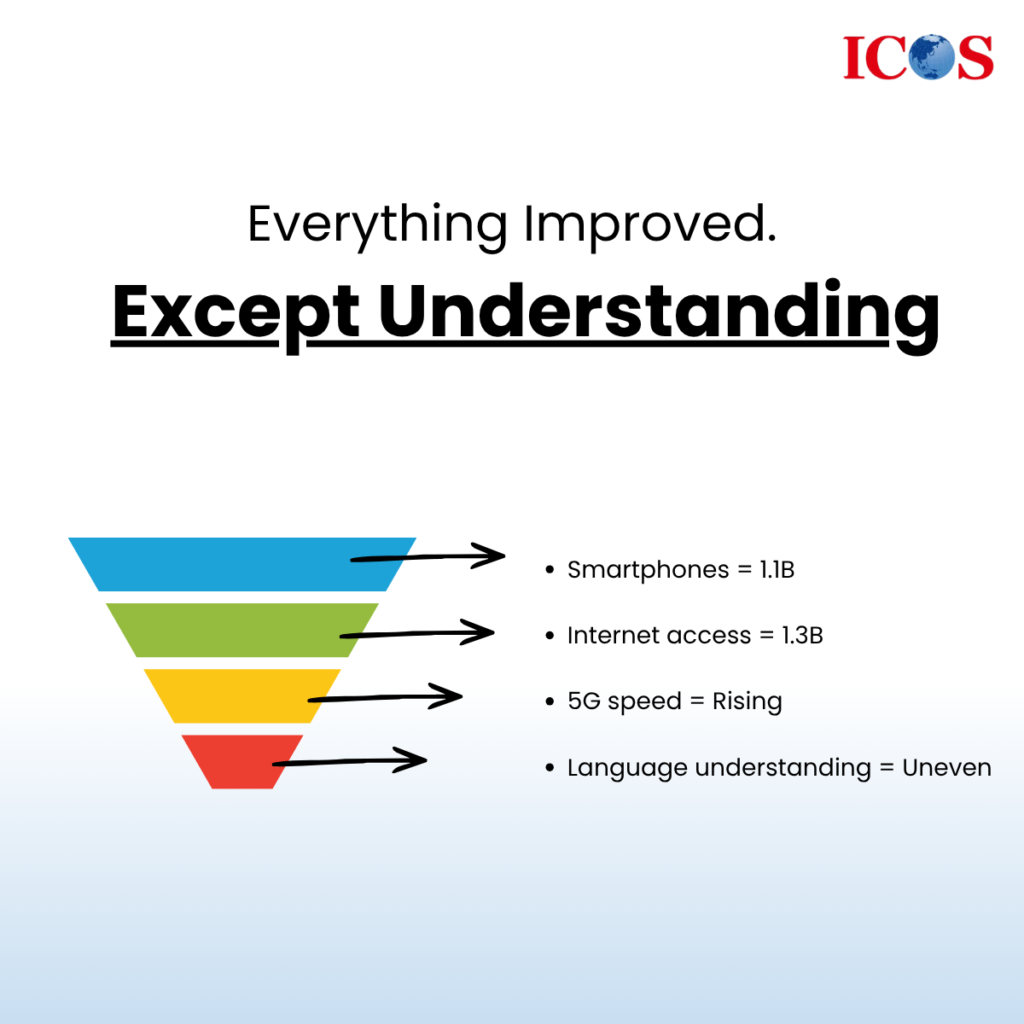
India crossed a major milestone recently. As of 2026, there were just over 1.3 billion internet users in India, putting the country’s internet penetration rate at 70% of the total population.
But the bigger story sits inside that number. Rural India now accounts for 55% of the country’s total internet population and is growing at roughly double the rate of urban areas, where growth has started to plateau.
Hardware is no longer the holdup either. India has 1.1 billion smartphone users, a figure climbing toward 1.5 billion by 2030, and 5G rollouts have roughly doubled download speeds across major networks.
What hasn’t kept pace is language. Only about 4 out of 10 Indians access the internet in English. The rest are navigating a digital world built largely for a language they don’t use day to day.
With 22 official languages and hundreds of dialects, India’s internet was always going to need more than an English-first approach, and the gap between connectivity and comprehension is exactly where Indian language translation comes in.
This is the gap the father in Patna fell into. Not a connectivity gap. A language gap.
What is Digital Translation?
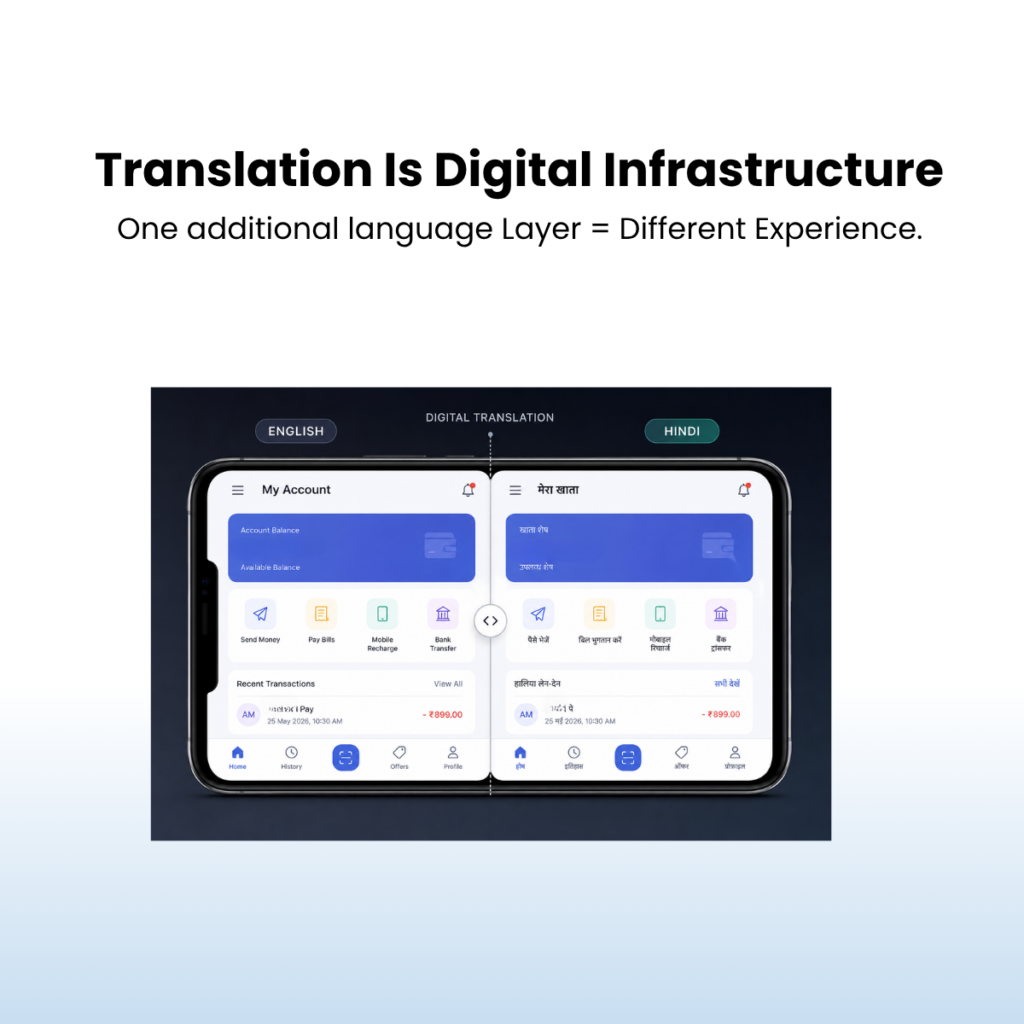
Digital translation is the process of converting online content, websites, apps, videos, and digital services, into a user’s native language, so it reads, sounds, and feels native rather than imported.
It goes beyond a literal word swap. Good digital translation accounts for tone, local idioms, script rendering, and even how a sentence is structured in that language, so a Hindi or Tamil user isn’t reading something that was clearly written in English first and converted later.
For a country with India’s language diversity, digital translation isn’t a finishing touch. It’s the layer that decides whether content gets used at all.
Digital Translation of Regional Language Content in India
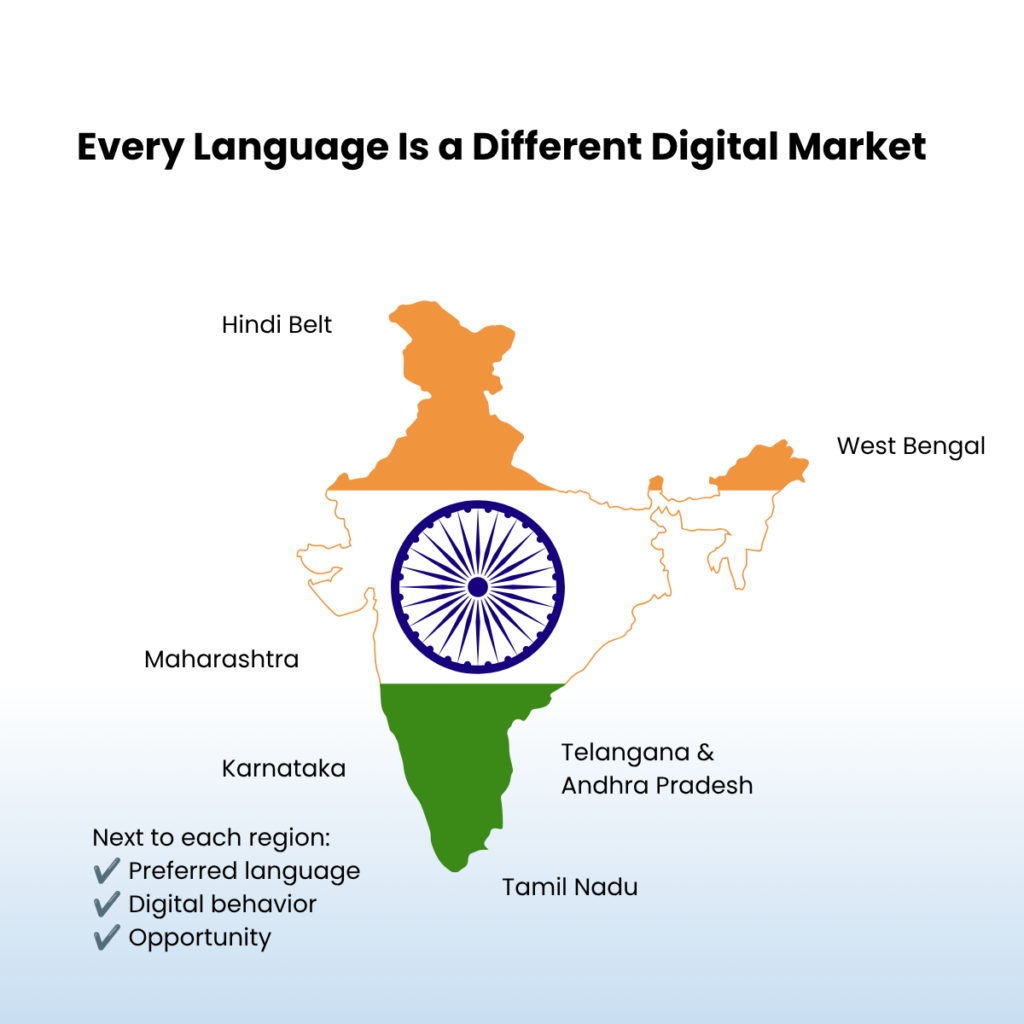
India’s internet isn’t one audience speaking one language. It’s dozens of audiences, each with their own digital habits, and digital translation has to be tailored language by language.
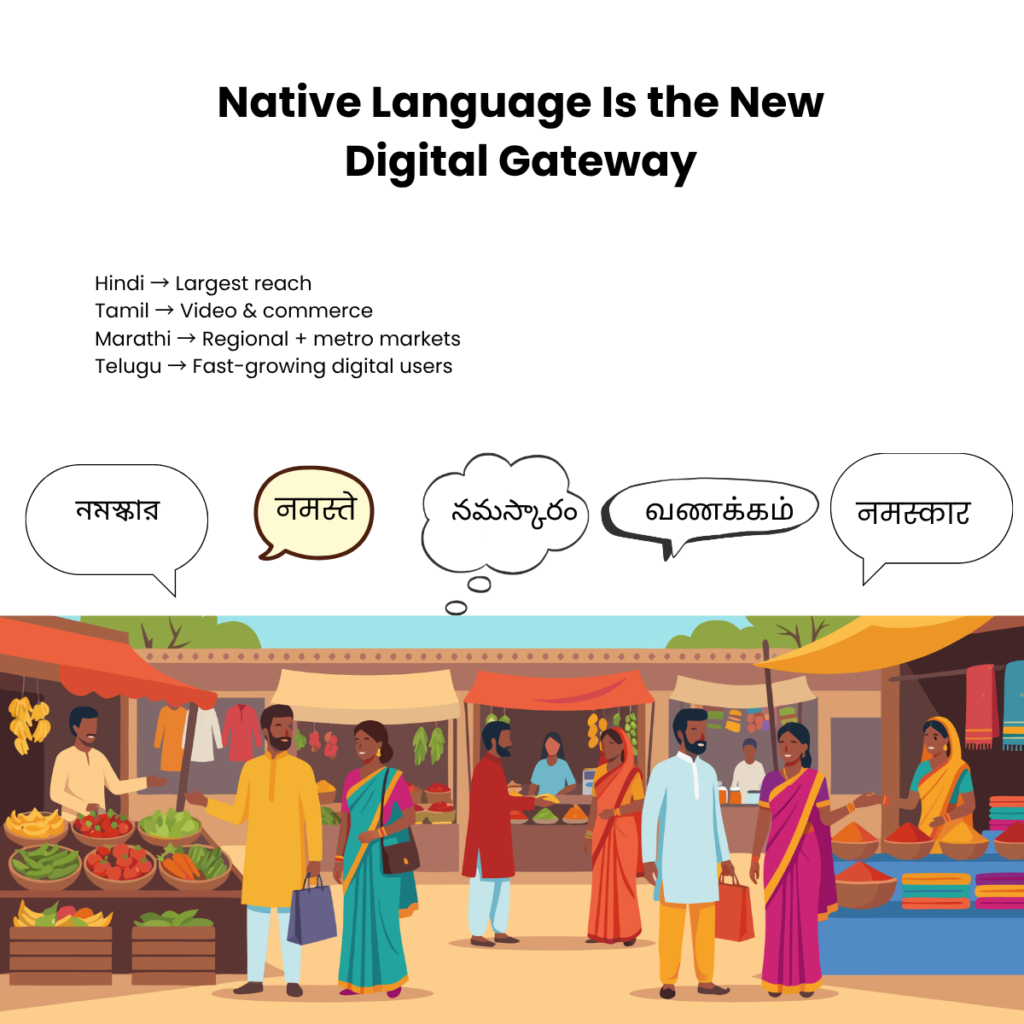
- Digital translation in Hindi carries the widest reach, given Hindi’s position as the largest non-English language group online. It’s also the most competitive, with users expecting polished, natural Hindi rather than stiff, formal translations.
- Digital translation in Marathi matters heavily for businesses targeting Maharashtra’s mix of metro and semi-urban markets, where users move fluidly between Marathi and Hindi depending on context.
- Digital translation in Tamil serves one of India’s most digitally engaged language audiences, with high content consumption around video, music, and e-commerce.
- Digital translation in Telugu, Bengali, and Kannada follows close behind, each tied to states with fast-growing internet bases and increasingly high expectations for native-language digital experiences.
Across all of these, one pattern holds: users actively prefer native-language content, and that preference is only getting stronger as more first-time users come online with no built-in comfort in English at all.
Why Indian Language Digital Translation Matters for Businesses
For businesses, this isn’t a goodwill gesture. It’s a growth lever, and it shows up in four concrete ways.
- Reach expands the moment language stops being a barrier: A huge share of India’s next users live in Tier 2 and Tier 3 cities, where English fluency is the exception, not the norm.
- Engagement rises sharply with native-language content: Indic language users spend more time consuming video, social media, and entertainment in their own language than in English, simply because it’s easier to stay engaged with something that doesn’t require mental translation.
- Trust follows naturally: Information explained in someone’s first language, especially around payments, health, or money, feels more credible than the same information delivered in a second language they’re less sure about.
Conversion is where all of this adds up. Reach without trust doesn’t sell. Engagement without trust doesn’t sell. But content that reaches the right audience, holds their attention, and earns their trust, consistently converts better than a one-size-fits-all English approach ever could.
Multilingual Content Strategy for Indian Audiences
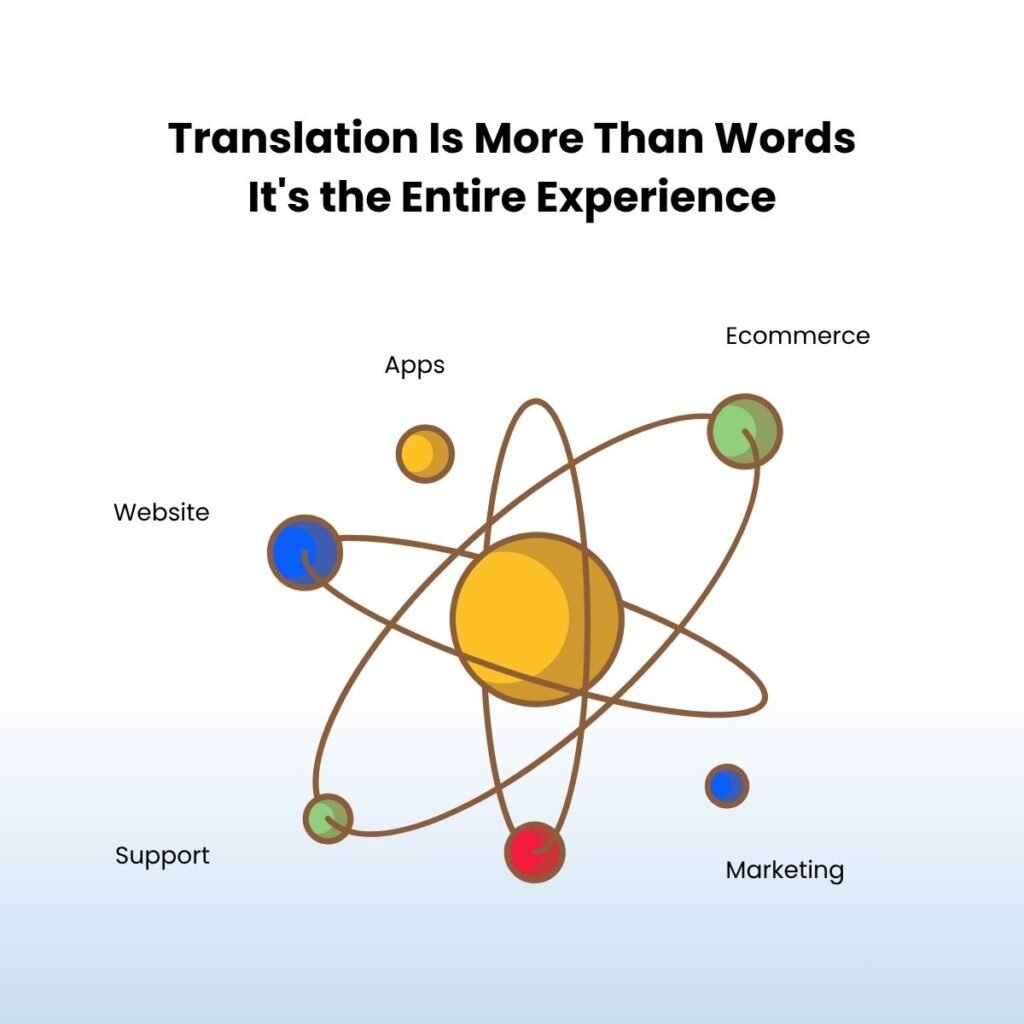
Knowing translation matters is one thing. Building it into how a business actually operates is another. A real multilingual content strategy touches five areas.
Website:
They need more than a language toggle. Layout, navigation labels, and even number and date formats should feel native to the language selected, not just translated text dropped into an English template.
Apps:
THEY should default to a user’s preferred language from the first screen, not bury it three menus deep, since most users won’t go looking for a setting they don’t know exists.
E-commerce:
These benefit enormously from native-language product descriptions, reviews, and checkout flows, particularly in markets where English-only checkout pages quietly cause cart abandonment.
Customer support:
Customer support in a user’s own language often determines whether a complaint gets resolved or a customer gets lost, especially for first-time digital users who are still building trust in online transactions.
Marketing campaigns:
They need translation built in from the concept stage, not added afterward, so humor, tone, and cultural references land the way they were intended to.
How Translation Supports Digital Inclusion in India
Beyond business growth, translation plays a quieter but equally important role: making sure India’s digital expansion doesn’t leave people behind.
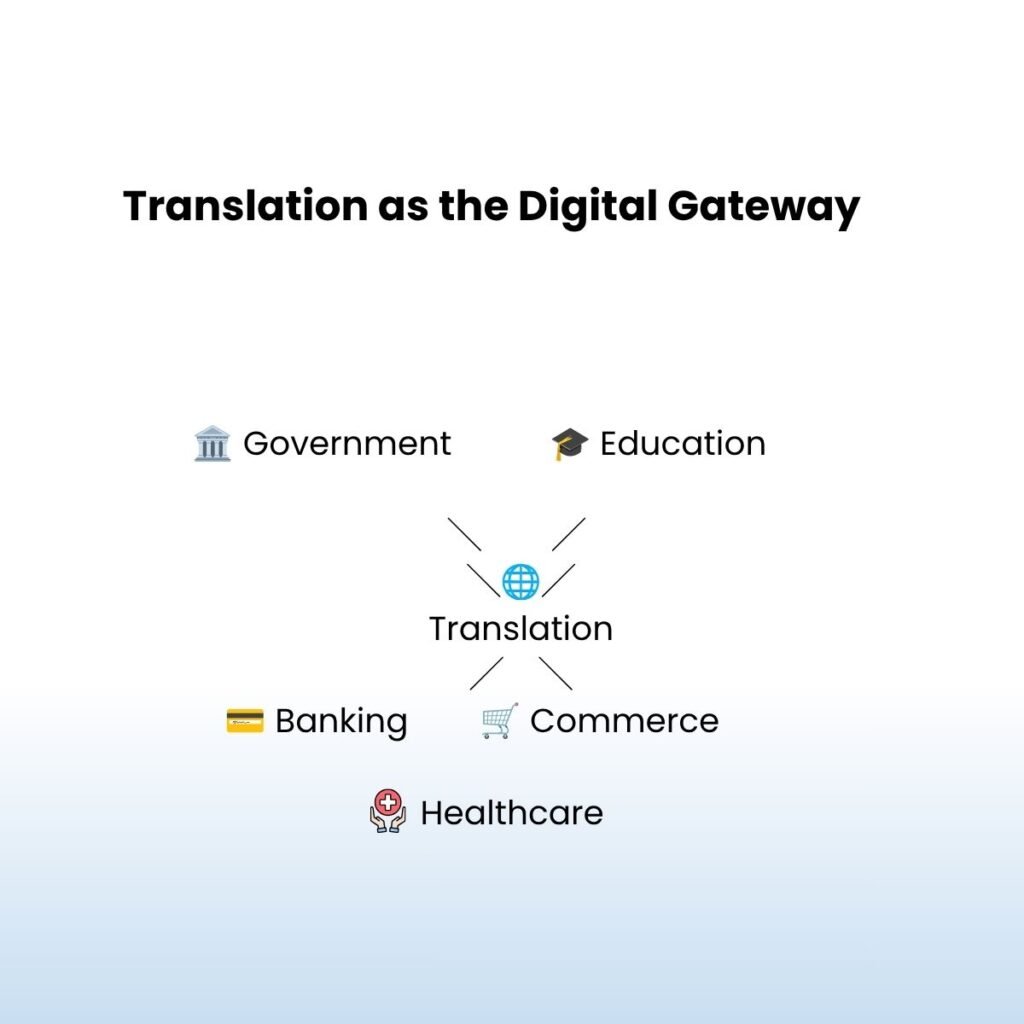
- Government initiatives under Digital India increasingly rely on regional language access to make schemes, applications, and public services usable by citizens who don’t read English.
- Education platforms translating course content into regional languages open up learning to students who’d otherwise be excluded by language alone.
- Healthcare information in a patient’s native language can be the difference between someone understanding a diagnosis and someone simply nodding along.
- Banking and financial services depend on regional language clarity to build trust with first-time users adopting digital payments.
- E-commerce Platforms that translate listings, support, and policies are often the first real bridge connecting Tier 2 and Tier 3 consumers to the wider digital economy.
In each case, translation isn’t a feature. It’s the difference between access on paper and access in practice.
FAQs
What is Indian language translation?
It’s the process of converting digital content, websites, apps, and services into India’s regional languages so users can access and understand them in their native language.
Why is regional language content important in India?
Most Indian internet users prefer content in their own language, and regional content directly affects how much they trust, engage with, and act on what they see online.
How many internet users prefer content in Indian languages?
A majority of India’s internet users, including 90% of new users coming online, prefer consuming content in their native language over English.
What is the role of translation in Digital India?
Translation ensures that India’s rapidly growing internet base, especially in Tier 2 and Tier 3 cities, can actually use digital services, not just access them.
How can businesses reach regional language audiences in India?
By translating websites, apps, and customer support into key Indian languages like Hindi, Marathi, and Tamil, and building native-language experiences from the start rather than as an afterthought.
Conclusion
Go back to that phone call from Patna for a second. The son’s instinct was to treat the problem as solved once the phone was set up and the data was working. But for his father, none of that mattered until the words on the screen made sense.
That’s Digital India at the scale of over a billion people. The infrastructure is built. The devices are in hand. What’s missing, for hundreds of millions of users, is content that actually speaks their language.
Indian language translation is what closes that gap, turning a billion connections into a billion people who can genuinely use, trust, and benefit from the internet in front of them.
India’s next billion users are already online, waiting to be spoken to in their own language. Don’t let a language gap cost you the audience you’ve worked so hard to reach